Activities to try
For readers aged 6 to 9. If you are 3 to 6, read this page and try the activities together with an adult. Ask an adult before trying anything with water, sharp tools, or anything breakable near a floor you care about.
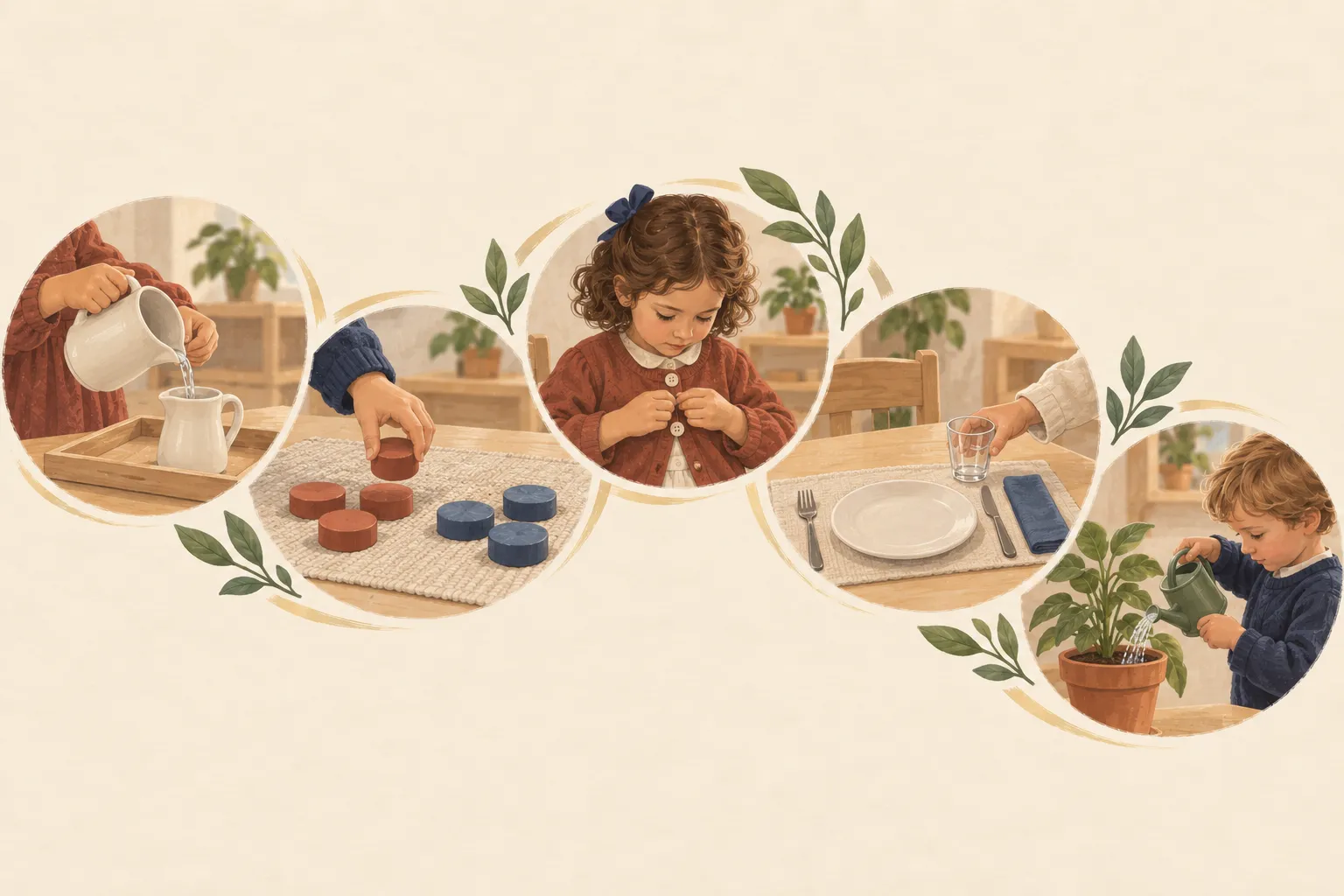
These are the kind of things Maria Montessori saw many children enjoy, once they were allowed to do them for real, slowly, and all by themselves. See Who Was Maria Montessori? if you haven’t read about her yet.
1. Pour it yourself
Find two small jugs or cups. Fill one about halfway with water. Practise pouring it from one to the other, slowly, watching the water the whole time, without rushing. Try to pour it without spilling a single drop. If you spill some, that’s completely fine. Wipe it up yourself with a cloth and try again. The point isn’t to get it perfect first time. It’s to get better at watching carefully and moving slowly, on purpose.
2. Sort by one thing at a time
Collect ten or so small objects from around your home: buttons, pebbles, pasta shapes, anything safe to handle. Pick one way to sort them: maybe by size, maybe by colour, maybe by shape. Line them up in order. Then try sorting the exact same objects a different way. Notice how the same pile of things can be put in order in more than one correct way.
3. Dress yourself, all the way, without help
Pick a day, maybe a weekend morning, and try getting fully dressed, buttons, zips and all, without asking anyone for help, even if it takes a long time. If something won’t work, try it a few different ways before giving up. Notice which parts are already easy for you and which parts need more practice.
4. Set the table, exactly
Before a meal, try setting the table completely by yourself: plates, cutlery, cups, napkins, all in the right place for everyone eating. Count how many people first, so you know how many of everything to get. Carry things one or two at a time if that’s safer than carrying a big stack.
5. Care for one living thing
Pick one plant (or, with an adult’s help, one pet) and take charge of one small part of its care, such as watering it or feeding it, at the same time every day for a week. Notice what changes, even slightly, by the end of the week.
Why these, and not something more exciting
None of these is flashy. That’s deliberate. Maria Montessori believed that children often concentrate hardest, and feel proudest, doing real tasks they’re trusted to do properly, all the way through, by themselves. To her, that mattered more than any clever toy or game. So the jug of water might matter more than it looks.
A note for grown-ups: these are original activity descriptions written for this project, inspired by the practical-life category described in Montessori at Home, not reproductions of any published activity guide or curriculum.